
The Supreme Court Just Struck Down Trump’s Emergency Tariffs. Here’s What It Means.

On February 20, 2026, the Supreme Court delivered one of the most consequential economic rulings in years. In a 6-3 decision, the Court ruled that the president cannot use a 1977 emergency powers law to impose tariffs.
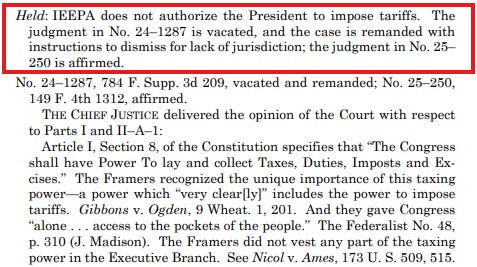
The sweeping tariffs President Trump imposed were originally justified by declaring national emergencies around fentanyl inflows and trade deficits.
What Tariffs Are Affected?
The ruling directly invalidates some of the biggest trade measures of the past year:
25% tariffs on most imports from Canada and Mexico
10%+ tariffs on many imports from China
10%+ “reciprocal” tariffs applied broadly across dozens of countries
Tariffs imposed under other laws remain untouched. These include Section 232 (national security), Section 301 (unfair trade practices), and Section 122 (temporary balance of payments measures), all of which have clearer congressional backing.
The Refund Question: Up to $200 Billion on the Line
Here’s where it gets interesting. Because these tariffs have now been ruled illegal, importers who paid them have grounds to demand their money back.
Estimates range from $160 billion to over $200 billion in potential refund claims. The Court didn’t order refunds or lay out a process. Instead, it kicked those details to lower courts, including the US Court of International Trade. But the legal door is wide open.
One important caveat: refunds would go to importers, not directly to consumers. Whether businesses that passed those costs along to customers would share any refunds remains to be seen. Either way, the fiscal and administrative headache for the government could be enormous.
The Trump administration moved fast. Reports indicate the president signed a new 10% global tariff under different legal authority almost immediately after the ruling came down. The playbook going forward leans on Sections 232, 301, and 122, laws that give the executive branch more defensible ground for trade restrictions.
Congress could also step in and pass legislation explicitly authorizing these kinds of tariffs, giving the president the “clear congressional authorization” the Court said was missing.
Meanwhile, existing trade deals and ongoing negotiations with China, the UK, Japan, and others are now in flux. Supply chains that adjusted to the old tariff regime may need to adjust again. Costs in affected sectors could shift unpredictably.
This ruling is a significant check on executive power when it comes to trade. The Court drew a clear line: emergency powers designed for foreign threats don’t extend to setting tariff policy without Congress signing off.
But it’s not the end of tariffs. It’s a redirection. The administration still has multiple statutory tools at its disposal, and the political will to use them hasn’t changed. What has changed is the legal landscape, and with it, the rules of engagement for how trade policy gets made.
Our Prediction for What Happens Next in the Markets
Although the initial reaction was slightly positive for markets, we believe the market is done reacting to tariff announcements. The muted response after Trump signed a new 10% global tariff almost immediately after the ruling tells you everything you need to know. Markets have priced in the noise. This is undoubtedly a historical ruling by the courts, but our prediction is that Wall Street will forget about it in less than a week. The tariff fatigue is real, and traders have moved on to pricing other risks.