
Biggest Winners & Losers from Silver's Surge

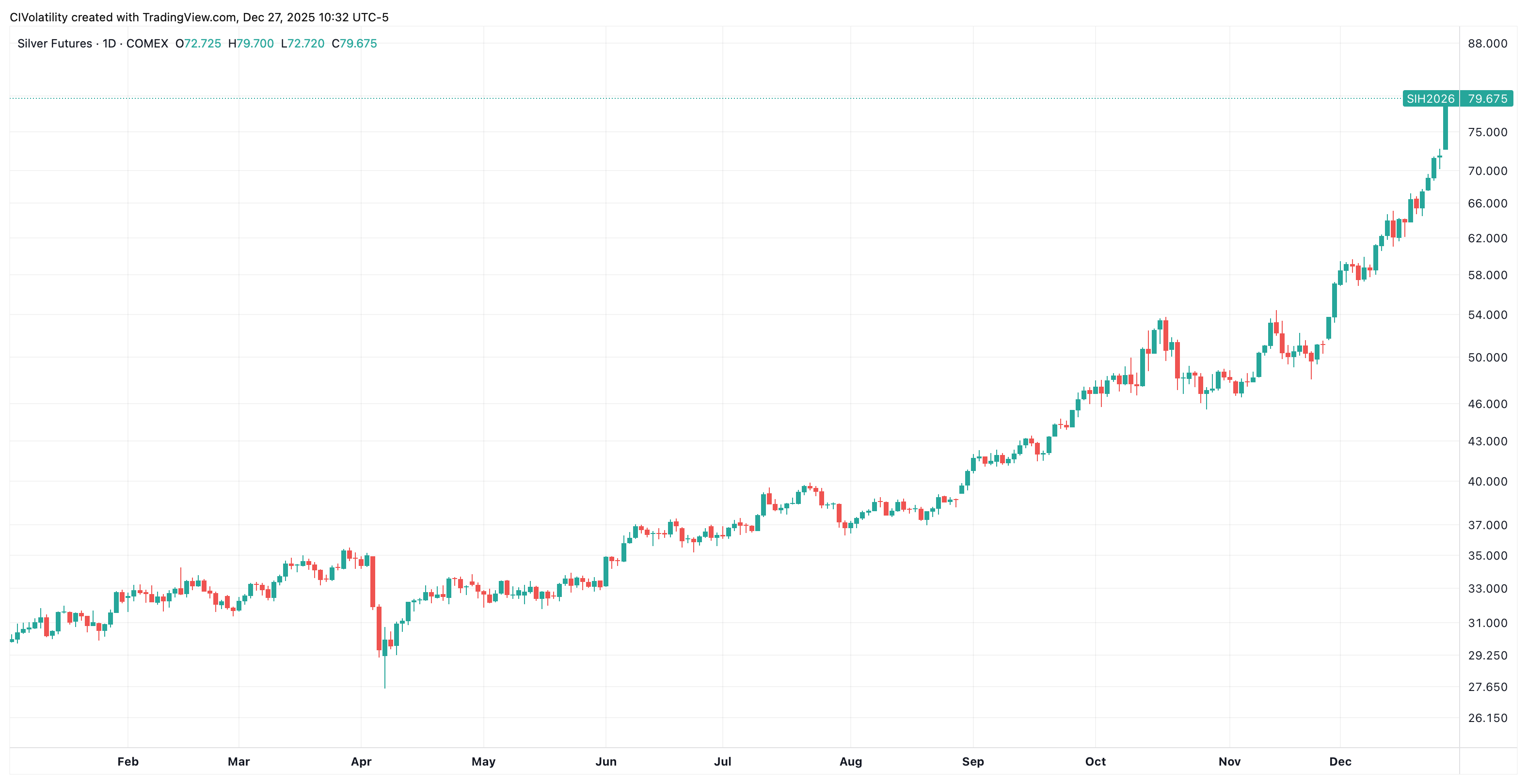
Silver prices continue to surge to close out the year and is now up 164% in 2025.
A surge this historic obviously creates some winners and losers.
The Big Winners
Silver mining companies
Direct producers of silver generally benefit from rising prices because increased revenue per ounce flows straight to the bottom line.
Pan American Silver Corp. (NYSE: PAAS
First Majestic Silver Corp. (NYSE: AG)
Hecla Mining Company (NYSE: HL)
Newmont Corporation (NYSE: NEM)
Kinross Gold Corporation (NYSE: KGC)
Agnico Eagle Mines Limited (NYSE: AEM)
Streaming Companies
Silver streaming and royalty businesses gain disproportionately from higher metal prices without the same operational risks as miners.
Wheaton Precious Metals Corp. (NYSE: WPM)
The Big Losers
Solar Panel Manufacturers
Silver is a critical component used to conduct electricity. Solar panels require meaningful amounts of silver, making the industry highly sensitive to price spikes. Solar manufacturing is brutally competitive, with thin margins and limited ability to pass higher costs onto customers. When silver prices rise, margins compress almost immediately.
First Solar, Inc. (NASDAQ: FSLR)
Electronics and Semiconductor Manufacturers
Silver is used in printed circuit boards, connectors, switches, and soldering applications. For high-volume electronics producers, even small increases in material costs can add up.
Apple Inc. (NASDAQ: AAPL)
Samsung Electronics (KRX: 005930)
EV Manufacturers
EVs use silver in electrical systems, sensors, power electronics, and battery management systems. While the silver content per vehicle is small, scale matters when millions of units are produced.

Tesla (TSLA)
Rivian (RIVN) - particularly vulnerable as an unprofitable growth company preparing to launch lower-priced models
How are the losers likely to respond?
The dramatic price increase is going to challenge these companies to reduce silver content per unit without compromising performance. They will have to innovate and find ways to maintain functionality while using less silver.
However, this strategy has practical limits. Despite years of research and development, no widely available substitute delivers silver’s unique combination of electrical conductivity and thermal performance.