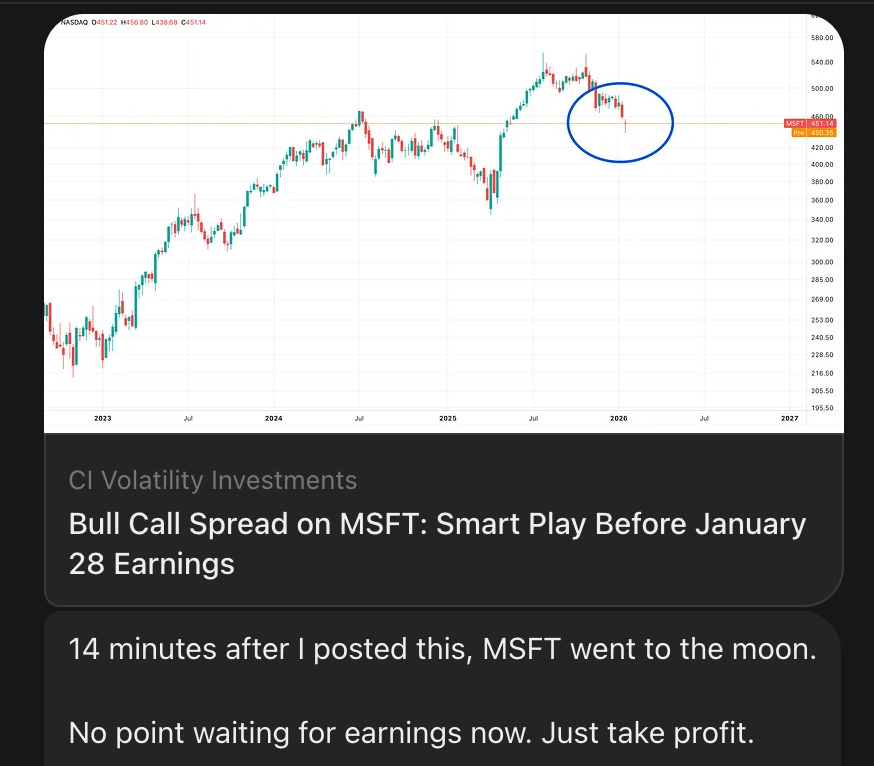
Microsoft (MSFT) stock has lagged behind broader expectations recently. Shares are down over 8% year-to-date in 2026 so far, following a relatively modest gain in 2025 and underwhelming compared to the S&P 500’s and Nasdaq’s stronger performance.
Historically, MSFT has delivered average annual returns of around 26% over the past decade, making the past couple of years feel particularly disappointing for long-term holders.
On the weekly chart, this pullback has formed a hammer which is a technical sign that hints at a possible rebound.
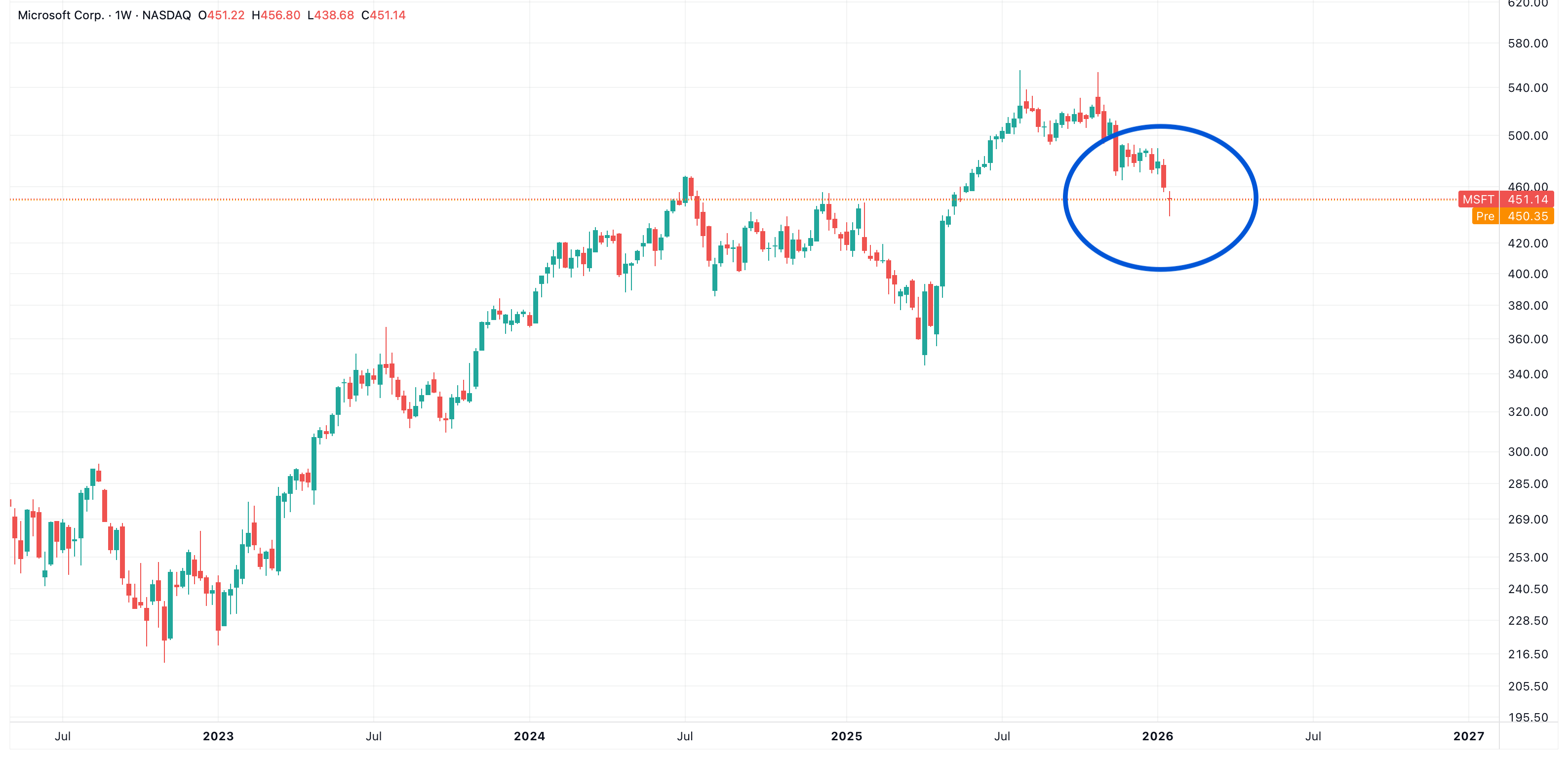
That said, a break below current support could extend the correction. Bearish phases of 20-30% aren’t uncommon for tech names.
With Microsoft’s fiscal Q2 2026 earnings set for after the close on January 28, could this be the catalyst for a meaningful move? Historical post-earnings moves average around 5%, so volatility is likely.
Buying shares outright remains capital-intensive. At $451, a standard 100-share lot costs over $45,000. For many portfolios, that’s a hefty allocation. Plus, a typical 5% adverse earnings reaction could wipe out $2,250 on that position quickly.
A bull call spread offers defined risk, lower capital outlay, and leverage—ideal for earnings plays with prudent sizing (e.g., 1-3% of portfolio risk). This debit spread involves buying a lower-strike call and selling a higher-strike call in the same expiration, capping both upside and downside.
The Trade
One attractive weekly structure in the current chain is the February 6 expiration bull call spread around the
$442.50 / $482.50 strikes. This vertical only requires a modest 3% upward move to reach breakeven.
This setup doesn’t demand a massive rally to profit. With over a week post-earnings to capture follow-through momentum, it allows time for the correction to potentially resolve higher if technical support holds and results deliver.
This bull call spread keeps costs manageable for smaller accounts, provides leveraged exposure for larger ones without full stock commitment, and aligns with a realistic bullish case given MSFT’s fundamentals, AI/cloud tailwinds, and current oversold technical setup. It doesn’t require heroic upside, just a confirmation that the recent pullback is over. Always verify current option pricing, implied volatility, and Greeks before entering any trade, and consider your risk tolerance around earnings.
*UPDATE
This trade became too profitable too fast. We closed it before earnings.