
Can AI Still Be a Bubble in a "Do-or-Die" US-China Race?

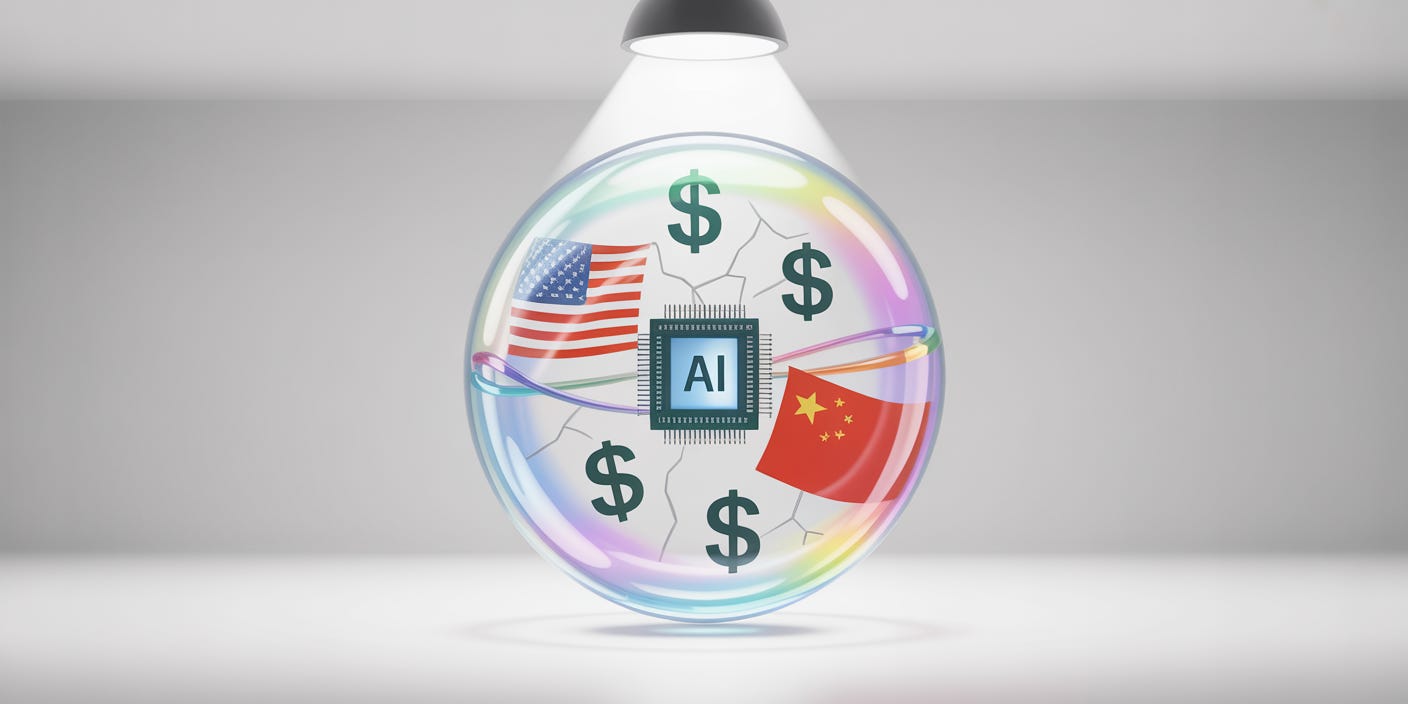
The US-China AI race is undeniably treated as existential: Both countries view AI leadership as critical for military superiority, economic power, and global influence.
Signs the US is treating AI as a “do or die” situation:
Export controls on AI chips to Chinese customers.
Massive infrastructure spending: By spending trillions on AI infrastructure, the US has essentially created a “wartime economy” mindset.
Government stakes in strategic firms: The US has taken unprecedented equity positions in AI companies to secure domestic chip production amid China competition.
Official rhetoric: Using terms like “Winning the AI Race.”
Why the Bubble Can Still Pop
The dot-com precedent: The internet was also treated as a national security concern in the 1990s. Clinton created the “information superhighway” program to ensure the U.S. remained the global leader in the “Information Age.”
The result? A bubble that vaporized $5 trillion. The internet did transform everything, but that didn’t save investors who paid 100x revenue for Pets.com.
National security concerns can actually make the bubble worse: When something is deemed existential, money floods in regardless of business fundamentals. Government support encourages companies to take excessive risks.
“Too big to fail” ≠ “shareholders protected”: The government will ensure core AI capabilities survive. That’s radically different from protecting current stock valuations or preventing losses.
What the pop will look like
It doesn’t mean AI disappears or China wins. It means hundreds of unprofitable AI startups will go bankrupt. A handful of companies emerge stronger while most consolidate or die. The technology continues advancing, but at more reasonable prices.
The U.S. government wants to win the war, so national security concerns guarantees the technology persists, but it guarantees nothing about which companies survive or what investors paid in 2025.