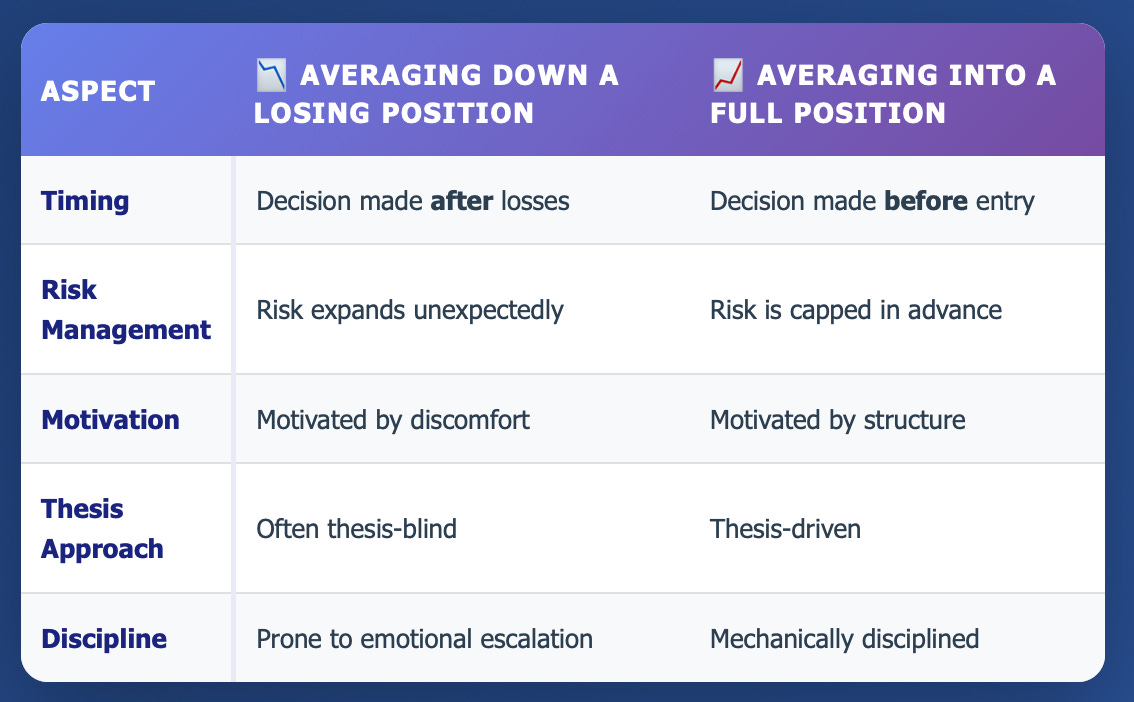
Averaging Down is not the same as Averaging Into a Full Position
Why One Is Risk Management and the Other Is Often Self-Destruction


There are two types of averaging downs
Averaging down a losing position
Averaging down into a full position
Averaging Down a Losing Position
Averaging down a losing position usually happens after you’re already fully exposed.
You bought your intended size.
The market moved against you.
You’re now adding more capital because the trade is red.
This is not risk management.
The key characteristics:
The original thesis is already under pressure
Your maximum risk is increasing, not decreasing
Position size is being dictated by price movement, not probabilities
The decision is often framed as “this can’t go much lower”
Lowering your cost basis feels productive, but it does nothing to improve the probability of the trade working. If anything, it amplifies the consequences of being wrong.
This is how small losses quietly turn into portfolio-level damage.
Averaging Down Into a Full Position
Averaging down into a full position is fundamentally different because the decision happens before the first buy.
You are not “adding because it’s down.”
You are executing a planned exposure across multiple price levels.
The defining traits:
Maximum position size is predefined
Capital is deployed incrementally
Risk is calculated on the full position, not the initial entry
Price moving against you is expected, not surprising
This is position construction, not damage control.
Professional investors do this constantly:
Scaling into volatility
Building exposure into illiquid assets
Structuring entries where timing precision is impossible
The Difference: Intent vs. Reaction