
What Would Happen to the World If We Capped Personal Wealth at $1 Billion?


On January 1, 2026, Zohran Kwame Mamdani, who famously suggested that billionaires shouldn’t exist, was sworn in as the 112th Mayor of New York City, becoming the first Muslim American to hold the office.
While a single city like New York can’t unilaterally abolish billionaires, Mamdani’s election sparks a broader question: What if society imposed a hard cap of $1 billion on personal wealth? Any excess earnings beyond that would be redirected, perhaps through 100% marginal taxation, forced donations to charity, or government seizure for public use.
Picture this: Someone hits $1 billion and gets a call saying, “Congrats, everything you earn from now on goes to charity.”
No major modern economy has ever attempted a hard cap on personal wealth. Throughout history, rich people have always had power and always wanted more, so a policy like this would be unprecedented.
“Earth provides enough to satisfy every man’s needs, but not every man’s greed.”
– Mahatma Gandhi
How Different Industries Would Change
Stock Market
Implementing a $1 billion cap would trigger massive upheaval. Billionaires might rush to relocate assets offshore, shift wealth into foundations, or simply retire en masse. Stock markets could plummet as founders dump shares to stay under the limit. High-net-worth individuals might emigrate to more permissive countries, causing brain drain and capital flight.
Tech Companies
We probably wouldn’t see new iPhones and gadgets coming out as fast. Many people in tech are motivated purely by money.
Tech CEOs who hit the cap might decide to travel the world, spend time with family, or do charity work instead of chasing the next big product launch.
Would Facebook or Instagram exist if their creators and investors were capped at $1 billion? Maybe not.
Maybe that’s not a bad thing. Someone smart once said we need the wisdom to NOT create some technologies, even when we can. Look at social media, many people now think it’s tearing society apart.
Car Industry

Elon Musk’s Tesla revolutionized EVs, but his multi-hundred-billion net worth fueled relentless ambition. Without that incentive, would Tesla have scaled so aggressively?
Would we even have electric cars today if people couldn’t make billions from them? Hard to say.
Real Estate

Luxury developments such as sky-piercing penthouses, billionaire row in Manhattan would never exist. Investors might shift away from speculative high-end projects, potentially lowering urban housing costs by reducing demand for trophy properties.
Affordable housing could benefit as capital flows toward public initiatives.
Oil & Gas
This industry is basically run by billionaires and oligarchs from around the world. It’s hard to even imagine what would happen if their wealth was capped. Let’s just say it would possibly involve conflicts and wars.
Drug Companies
Drug development is costly and risky. Without blockbuster profits, fewer venture-backed biotech firms might emerge. However, critics note many breakthroughs stem from public funding. A cap could push more affordable generics and prioritize life-saving over lifestyle drugs.
Startups and Venture Capital
As Wall Street bonuses and hedge fund billions would vanish. Risky startups might struggle for funding, slowing disruption and the creation of new companies.
The Bigger Picture: Better or Worse?
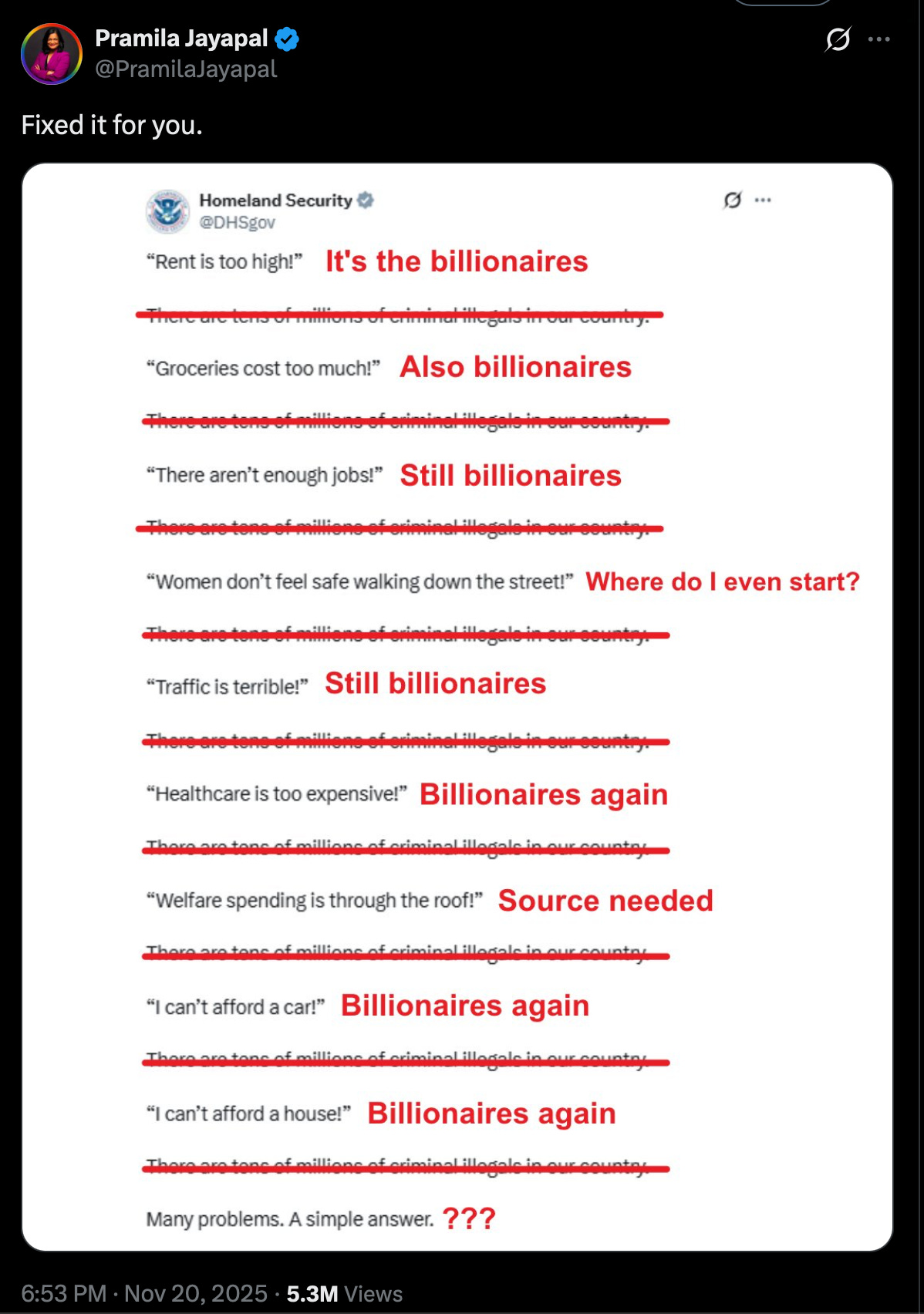
Congress member Pramila Jayapal clearly thinks we’re better off without those “evil” billionaires while famous journalist Matt Yglesias recently defended the existence and role of billionaires in his widely read article titled “Let’s all practice billionaire positivity” arguing against generic “billionaires are bad” rhetoric.
But the truth is no one knows if capping wealth at a billion would “work,” as it’s untested at scale. But in an era of widening gaps, it’s a provocative thought experiment.